Posts

Showing posts with the label recycling

The blame game.

Image
No one enjoys taking responsibility when things go wrong. We are all eager to determine why a failure doesn't lie solely on our shoulders or why it's not our fault at all. Blame shifting is a common practice and phrase thrown around in our home.  "Well, if she didn't ...then I wouldn't have ... "  "If he wasn't didn't say ... then I wouldn't have said ..."  Although the blame-shifting technique is prohibited in our family, it still finds its way into many unfortunate situations.  Why does it matter? Taking pers onal responsibility helps to ensure the same thing doesn't happen again (and again and again). Situations usually have multiple actors that could all play essential parts in prevention, but what's important is that each player knows their role and how they can personally correct it. You are only able to control yourself, and sometimes, that proves difficult.  This is such a basic and juvenile conversation that it would see...

Recycling Education

Image
I was in the materials recovery facility trying to get some action shots as the single-stream material was being processed. It's always helpful to have visuals as you present to help everyone understand the journey of your recyclables. As I walked to the loading spot, I passed overflowing barrels—they caught my attention because they wouldn't look great in the video I was trying to capture.  I paused in the feed area, waiting for a large 100-yarder to empty the community's single stream so I could follow through the entire process. As I waited, the line stopped once, twice, and again. I turned to see why it kept stopping, and the team was expeditiously working together to scoop a shrub, including branches, leaves, and dirt, off the line.  At that moment, I decided that covering the "ugly" things I didn't initially want to capture in my video was more important than showing the process itself.  The overflowing barrels were empty at the start of the shift and em...

Glass is a pain!?! Yes, I said what I said.

We are a company born from the goal and desire to recycle every item possible. We are not a waste company that also handles recyclables. During dual-stream collection days, we had four glass bins and sorted the glass by color. The mixed color bin (made up of the materials that broke during sorting and transit) was difficult to consistently move or find a "home" for but the other bins were generally manageable. This method of handling the glass was more manually intensive and harder on the equipment directly processing the containers but the paper was collected separately and the process and material remained free of glass contamination.  Fast forward to single stream collection, all material being collected in one vehicle, compacted and dumped on our tipping floor. Most of the glass arrives broken from transport and has completely infiltrated every inch of the load. On especially wet and snowy days the glass has become "glitter" on clumps of waded paper. (Imagine de...

Great Question - Response to Reader Question

Hi! And thanks for being the recycler for our residential trash service. I was looking at your blog and found it useful. I wonder if you could address a topic in the blog, and/or send me a personal reply. It is said that about 10% of what we put in our home recycle bin gets recycled. The rest goes overseas, into landfills, etc. Can you comment on this? I realize some of the reason for this is that people contaminate their recycling, rendering the whole load unusable, but what other reasons are there that cause such a small percentage of our recycling to not get recycled? Thanks in advance. Thanks for reading, asking, and for your concern in general. When the 10% number is thrown around it sure is concerning. This number, from what I've read when we researched a bit more in-depth, is based upon 10% of ALL materials produced in the US being recycled. That is still terrible, but not reflective of only 10% of the material placed in your recycling bin. Unfortun...

The Great Divide

Image
We recently shared our thoughts on what is wrong or "going on" with recycling. I admit it was out of sheer frustration, but 100% true. We paused accepting material direct from residents at our facility due to the overwhelming amount of garbage received and litter that was occurring despite repeated warnings and postings.  We were absolutely shocked at the response we received. Some were angry and frustrated (at us) and other residents explained how frustrated they'd become seeing the bins they used littered with items they knew didn't belong. We even had one resident explain that they had themselves cleaned up material that was thrown outside the bins, despite having room inside.  Although we have expressed such frustration with people who refuse to cooperate and follow instructions we have also spoken and interacted with so many who go above and beyond. Our goal is and has always been, to increase not only the recycling efforts but the positive recycling impact of ou...

Stay off the angry train - Jump into action

Image
It's crazy - as I scroll through business social media posts I am seeing an uptick of anger in regard to plastics and recycling. Seemingly angry people call out others for irresponsible behavior, false information, and despicable treatment of our environment. Passionate comments, varying degrees of first-hand knowledge, and lots of blaming and pointing. This public platform seems to be what people need to vent or blame.   I struggle. Should I celebrate that people are taking notice? It seems like the wrong kind of notice, not necessarily productive or positive but attention nonetheless. I wholeheartedly agree that we have some problems when it comes to "stuff" I see these as the three most significant issues:  1. Litter is a big problem.  2. Items being landfilled are a big problem. 3. 100% recyclable (and in demand) items being littered or landfilled is a HUGE problem.  What solutions do we have?  Litter is a big problem . An unpopular but pretty basic iss...

Recycling Today

Image
I've posted many times before about the "real issue" with recycling. Spoiler alert - it has a whole lot more to do with who is doing it than the items in need of it. We're presently feeling pretty deflated - we'd love some real suggestions on how to fix this. Let me give you a little back story: Right around the time COVID was at its peak, recycling markets were also doing pretty terribly. Due to health and safety as well as overall costs, a large number of public recycling programs were being cut or closed entirely. Recycling is what we do so we wanted to try and step in and provide a solution for residents who no longer had recycling access. We decided to ramp up our residential collection bins onsite and provide this service free of charge. We purchased some bins and to ensure that we were setting things up for success we invested in clearly worded labels to avoid recycling confusion - we had signs made and posted them . Our bins received an overwhelming rec...

Celebrate each step

Image
You come home from work and in place of the organized and mess-free home, you left this morning, you enter chaos. Even an amateur hunter could follow the trail across the entire first level and lead to the bedrooms of the accused. Step by step, sock by sock and paper by paper anger rises as you walk. You are about to blow. With so many examples of wrong behavior, how can you open the door and celebrate the homework that is currently being worked on?  It may be a leap, but in my mind, this is the current state of recycling.  We read articles, watch news stories, and see blips on our social media. Recycling is going in the wrong direction and the pollution and destruction of our environment are at an all-time high, or is it? Sometimes when you are so close, you cannot even make out the big picture, you are not getting an accurate view, it's just all blurry and messy.  Recycling by nature is messy (both figuratively and literally). When you are dealing with "trash" you don...

Let's Own It.

Image
  Holding way too much in my arms and hands, not a finger to spare (I am a huge fan of the lazy man's load - as my husband always tells me), I try to use my foot as the lever to open the door in front of me. After the first few failed attempts I struggle to shift the weight of the many overflowing items in my arms and reach with my elbow. Somehow, almost unexpectedly the door abruptly swings open, I lose the disheveled balance of every item that I was haphazardly clinging to, and one by one they crash to the ground. "Stupid door" is my immediate and gut response. As I look back and chuckle (now), how did I not think that would happen, how can I call anything but my actions "stupid"?   Despite my newfound clarity, after the fact, it is so hard in the moment to recognize that our own decisions are often what lead to unfavorable outcomes. Frustration, disappointment, embarrassment, and sometimes fear (during larger mishaps)  take over and we feverously search for a...

Would an increased bottle rebate = recycling improvements?

Image
 If we gave you .10 cents for every water bottle you recycled, would you recycle more?  https://www.news10.com/news/legislation-introduces-revised-bottle-bill-to-include-ten-cent-returns/ I can say with a great deal of confidence that it would not affect the recycling rate in my household. What would it affect? Well, that is a good question.  The stated goal of the bill is to increase recycling rates and promote recycling participation with some monetary motivation. The downfall is that much like most rebate/refund programs there tend to be those who try to exploit them. An episode of Sinfield speaks to bottle redemption road trips.  I have never enjoyed the muttered complaints without a solution but I don't think there is one clear, single solution.  I take that back. There is one clear solution that would make an enormous positive impact on recycling and launch forward the circular economy. The solution is so incredibly easy and I've said it so often that I ev...

What motivates you?

Image
In order for goals to be kept and exceeded people need to be motivated. Some people have an easier time getting and staying motivated all by themselves, others need periodic stroking, some need consistent prodding, while others may need to be pulled.  Knowing what motivates people to start as well as how to keep them going can help to shape your message and improve your impact. This would go for something as common as New Year health goals, organization practices, quitting smoking, eating healthier, or improving the recycling and waste reduction in a household, or business. We are very biased but we feel that recycling is pretty essential. We do also feel that following the first two R's first is necessary (1. Reduce & 2. Reuse). We want to be sure that as an organization we are helping to motivate residents and businesses alike to continue to improve their recycling impact.  So, please help us out.  Tell us what motivates you to recycle with care & reduce waste?...

Is it worth the argument?

Image
You are on a business-focused social media platform and there is a great post motivating consumers to recycle their PET bottles. It's an encouraging video showing all the potential "new" products the "old", recycled PET can become. The post focuses on the idea that these bottles are not only recyclable but an in-demand raw material that manufacturers are actually seeking. This is all an attempt to stoke the interest of the public and motivate them to recycle and keep bottles out of the landfill or worse, discarded as litter. What possible negative reaction could this post get?  Insert a snarky comment by someone who knows someone who had a job, at one time, that is semi-related to a position that assisted in the recycling of PET. They fire back that PET recycling back into a PET bottle isn't possible and/or profitable. This one comment is followed up quickly by a few other recycling naysayers "recycling is dead", "recycling can't be profit...

reduce REUSE recycle

Image
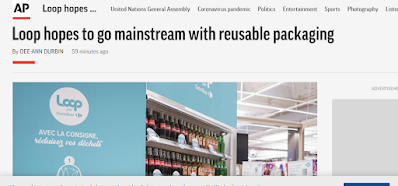
This has been in the works for quite some time now. Manufacturers have been discussing the logistics and how to spark interest and participation. I think it sounds like a wonderful plan but it will take extra effort and participation. Are you willing to pay the extra deposit and take the extra time needed to return the reusable packaging?  In my opinion, it will depend on circumstances. There are traveling and vacation occasions that don't lend well to the extra steps that would be required. Daily though, if the setup is easy enough, it just might be worth the little extra effort.  I do worry because we have posted repeatedly about the failure of recycling efforts. I don't see how the reuse efforts would be any different.  The process is only as good as the participants.  https://apnews.com/article/europe-business-france-environment-and-nature-united-kingdom-bbd9e1e7bfe999ae749f39155fd63078

The real issue with recycling.

Image
As an insider looking at the state of recycling and all the pitches at trying to "fix it" I am left scratching my head. Sure, there is plenty that can still be done to tweak and improve recycling. There is absolutely no negative impact of a stronger focus on a complete environmental approach as companies push towards a circular economy and true product recyclability. Those are all wonderful things.  A recycling bin which is clearly labeled "No Bags and No Metal other than alum/tin cans" in the bin you'll see MANY bags and a metal charcoal grill (complete with charcoal). Recycling with care?  All those great changes won't do much though unless we focus on the real recycling issue. I just can't help feeling like we are trying to put a band-aid on a toe while we have lost both legs. The real issue with recycling is us. Consumers, residents, the recyclers are doing a terrible job and most just don't care. They say the...

Cape Cod's plastic *WATER* bottle ban

Image
Cape Cod towns decided to take a stance and ban plastic water bottles in their town. You can drink soda, juice, and other beverages in the same plastic bottles but under no circumstance should you consider drinking bottled water, not in their town. The confusing part is that these bottles are 100% recyclable and in demand. There are consumers currently seeking these raw materials. There is no question about their recyclability, the only thing in question is if consumers can be bothered to get them into the recycling bins.  I've found that as I read the news I am confused. This decision by the towns of Cape Cod is one of those times. I agree wholeheartedly that there are many necessary steps to be taken to increase the positive impact of recycling. This very random and illogical approach is what absolutely baffles me. If you want to ban something look into items that really have inconsistent or no end markets. Styrofoam for example - have at it, ban away. Plastic sandwich/snack bags...

Compostin'

Image
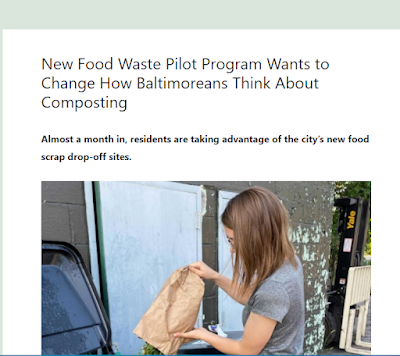
As a materials recovery facility, we were/are passionate about composting and the potential for growth in that area. So passionate in fact that a few years ago we worked with a few local communities and companies to try and get a successful composting program underway. Despite a good deal of effort, there were a few reasons we could not get the program off the ground during the pilot process. Steps taken by Baltimore's Food Waste Pilot Program, as quoted in the article, would assist with many of them.  1. Unfortunately, due to being located in a semi-rural area, we could not get the saturation we needed to make the collection/transportation affordable. Having one collection point that the businesses, institutions, and community can pool their material makes participation possible.  2. The second and repeated issue with recycling and waste reduction programs; we had severe issues with contamination among the facilities that did agree to participate. If you send contaminated co...

Say What??

Image
I have scrolled through my business newsfeed and felt the need to fact-check or at least provide my input on some topics that have been shared and posted repeatedly. Many may not completely understand, at least from a materials recovery facility standpoint.  1. "Choose glass in place of plastic because it's more environmentally friendly."   A number of materials recovery facilities made the decision to no longer accept curbside glass. When collected in a curbside/residential recycling program, glass becomes color mixed and collects all the small contaminants (straws, lids, shredded paper, small pieces of plastic) which makes it much more difficult to sell and makes it nearly worthless or a negative value. Glass collected in this manner also has little end markets unless processed for alternative uses (drainage/septic/trenching/etc). Glass is also the most destructive of all recyclable materials that pass through materials handling equipment which makes it extremely costl...

Upswing - but let's not be short sighted.

Image
Things are finally looking up in the recycling industry. It has been a long and difficult journey that unfortunately many didn't survive. Positive changes are underway; end-users are now seeking material that collection centers and materials recovery facilities were recently begging & paying to move. Another positive step is that more and more companies are making commitments to increase the recycled content in their products and aiming towards the goal of a truly circular economy. This is amazing news that benefits not only the recycling industry but our environment as a whole.  With all the positive trends there does remain one consistent issue. End-users will require quality material in order to make quality products. The number one issue that directly contributed to the crumbling of the recycling industry remains the number one issue with recycling; contamination. Outreach, education, and investments by so many have helped to make the information more available and easier t...

ISO: RecycleMan

Funny but true. Our bins are begging for a quality control person ... "Recycle Man". Are you willing to fill the position? What could you do to police your bins without hovering over them? 1. Start with correct and complete labeling. Clearly label what the bin is intended for. Next, clearly explain what should NOT be placed in the bin, make it guess free. 2. Be sure that you have both garbage and recycling bins in all locations. Often people try to do the right thing by limiting where they place garbage bins (or recycling bins), ultimately forcing people to recycle or avoid contamination in the recycling.  The issue with this is that it causes a lot of contamination or failure to recycle. People who care about recycling will do the right thing but those people would also be likely to seek out a recycling bin. People who wouldn't have made the effort to find the recycling bin will throw contaminants in the wrong bin unphased. Although we feel the placement of b...

Let's get real

Image
Recycling markets are in a very tough spot right now. While some individuals and businesses may not know most have felt the strain or have at least heard the buzz. The bulk of the issues have been an issue for a really long time it's just gotten a lot worse. It's kind of like when your child tries to go on a hunger strike and will only eat dessert. You can let it go and hope for it to pass, with the likelihood of it spreading to your other children, or you can put an end to it (or at least put a plan in place to slowly put an end to it). In the recycling industry we need a plan. My plan starts with education by explaining what I believe the real issues are. 1. Contamination is real and the absolute HUGEST issue. Some recycling rules can be extremely confusing; items that are accepted, preferred, and completely fine in one program can cause big issues for another. Other times (lots of times) there are items that are clearly NOT recyclable that are carelessly placed in th...